


1.Buddha ra Uhanko Dharma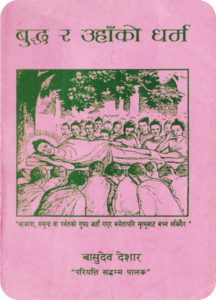
In this book it describes about Buddha`s life story in simple Nepali language. As well as mentions about (Caturarya-satya), the four truths are dukkha, samudaya (“arising,” “coming together”), nirodha (“cessation,” “confinement”), and marga, the path leading to cessation. The Noble Eightfold Path (Pali:ariyo aṭṭhaṅgiko maggo, Sanskrit: āryāṣṭāṅgamārga) is an early summary of the path of Buddhist practices leading to liberation from samsara, the painful cycle of rebirth. The eightfold path is Right Understanding, Right Intent, Right Speech, Right Action, Right Livelihood, Right Effort, Right Mindfulness, and Right Concentration.
Publish Year: 1999 October 12 (First Publication)
Price:Free Distribution
Publisher:Mr. Durgadas Ranjit, Teku, Kathmandu, Nepal
Page:82
Language: Nepali
Number of copies printed:1500 copy
2.Buddhako Jibanopayogi Sikhyaharu Eka Bibechana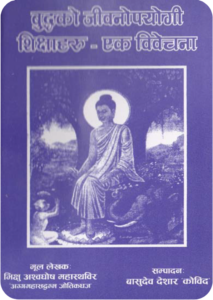
Venerable Ashwaghosh is well known Theravada monk of Nepal. He is a former Vice Chairman of Lumbini Development Trust (LDT) and former Chief Prelate (Sanghanayaka) of the All Nepal Bhikkhu Association of Nepal. He has been written many books about Buddhism and moral educations.
By receiving his permission, I have edited in some practical way in Nepali language one of his famous book.
Publish Year: 2002 January 1 (First Publication)
Price:Free Distribution
Publisher:Mr. Durgadas Ranjit, Teku, Kathmandu, Nepal
Page:90
Language: Nepali
Number of copies printed:1500 copy
3. The life of the Buddha and his four noble truths
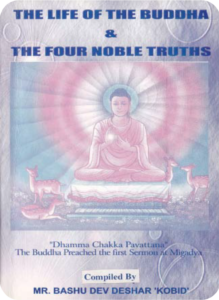
This book is about Journey of Buddha from Childhood to his enlightenment in simple English Language.
Publish Year: 2003 October 26 (First Publication)
Price:Free Distribution
Publisher:In the memory of Late Ganesh Maya Deshar, Kathmandu, Nepal
Page:78
Language: English
Number of copies printed:1000 copy
ISBN:99933-59-66-1
4. Milinda Prasana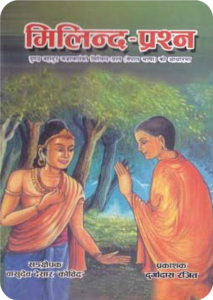
The Milinda Prasana (Milindapanha) is one of the great classics of Pali Buddhist literature, a spirited dialogue between the Greek king Milinda and the Buddhist sage Nagasena. The dialogue touches on many subtle problems of Buddhist philosophy and practice, dealing with them with wit and eloquence. This is first part of that book in Nepali Language.
Publish Year: 2006 June 5 (First Publication)
Price:Free Distribution
Publisher:Mr. Durgadas Ranjit, Teku, Kathmandu, Nepal
Page:116
Language: Nepali
Number of copies printed:1500 copy
ISBN: 99946-34-01-1
5. Tripitak Prabesh
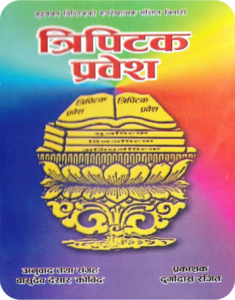
In Buddhism, the Tripitaka (Tipitaka in Pali) is the earliest collection of Buddhist teachings and the only text recognized as canonical by Theravada Buddhists. Many commentaries have been added over the centuries, however. Tripitaka means “three baskets,” from the way in which it was originally recorded: the text was written on long, narrow leaves, which were sewn at the edges then grouped into bunches and stored in baskets.
This books is A short introduction: The TRIPITAKA, written in Nepali language.
Publish Year: 2006 July 10 (First Publication)
Price:Free Distribution
Publisher:Mr. Durgadas Ranjit, Teku, Kathmandu, Nepal
Page:164
Language: Nepali
Number of copies printed:1500 copy
5.1 Tripitak Prabesh
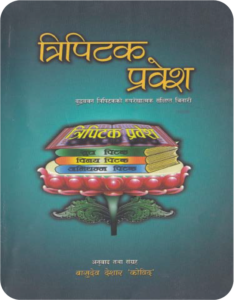
In Buddhism, the Tripitaka (Tipitaka in Pali) is the earliest collection of Buddhist teachings and the only text recognized as canonical by Theravada Buddhists. Many commentaries have been added over the centuries, however. Tripitaka means “three baskets,” from the way in which it was originally recorded: the text was written on long, narrow leaves, which were sewn at the edges then grouped into bunches and stored in baskets.
This books is A short introduction: The TRIPITAKA, written in Nepali language.
Publish Year: 2013 (Second Edition)
Price:Free Distribution
Publisher:Wipul Darshan Udasa, Shreya Shakya, Kathmandu, Nepal
Page:224
Language: Nepali
Number of copies printed:1000 copy
6. Selected Discourses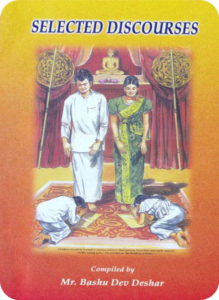
Sutra is a Sanskrit word that means “string” or “thread”. In Indian literary traditions, it also refers to an aphorism or a collection of aphorisms in the form of a manual or, more broadly, a condensed manual or text.
In Buddhism, sutra or sutta refers mostly to canonical scriptures, many of which are regarded as records of the oral teachings of Gautama Buddha. The Pali form of the word, sutta, is used exclusively to refer to the scriptures of the early Pali Canon, the only texts recognized by Theravada Buddhism as canonical.
This book carries some useful Sutra and meanings in English language for the school students.
Publish Year: 2003 (First Publication)
Price:25 Rs.
Publisher:Bhassara Secondary School, PUrnachandi, Lalitpur, Nepal
Page:78
Language: English
Number of copies printed:1000 copy
ISBN: 99946-34-01-1
7. Patachara
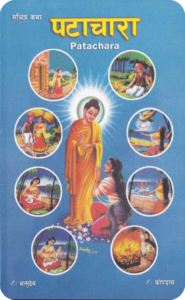
Patacara was a notable female figure in Buddhism, described in the Pali Canon. Among the female disciples of Gautama Buddha, she was the foremost exponent of the Vinaya, the rules of monastic discipline. She lived during the 6th century BCE in what is now Bihar and Uttar Pradesh in India.
This is pictorial book in Nepali language.
Publish Year: 2009 December 9 (First Publication)
Price:Free Distribution
Publisher:Jujubhai, Hiradevi, Pratima Devi Shakya Family, Kathmandu Nepal
Page:64
Language: Nepali
Number of copies printed:1000 copy
7. YATRA to Lumbini – The Origin of Buddhism
This book “YATRA (Sanskrit: यात्रा, ‘journey’, ‘procession’) to Lumbini – The Origin of Buddhism and Peace” provides a valuable window on information assurance and covers the necessary components about Lumbini historical point of view and some archaeological investigations and excavations, which was conducted by UNESCO in corporation with the Department of archaeology of Nepal government and the Lumbini Development Trust. Also there is useful information’s about how to visit Lumbini, contact no of hotels/lodges in Lumbini areas, visa process for foreigners in general.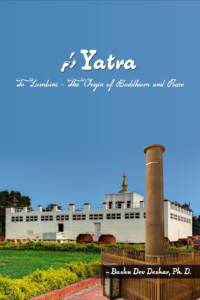
Publisher: Bashu Dev Deshar (WISB PUBLICATIONS, Nepal)